The Deputy Secretary General of the National Resistance Movement (NRM), Rt. Hon. Namayanja Rose Nsereko, has urged Workers’ League and trade union leaders to make full use of their representation in government structures to influence decision-making and advance workers’ interests.
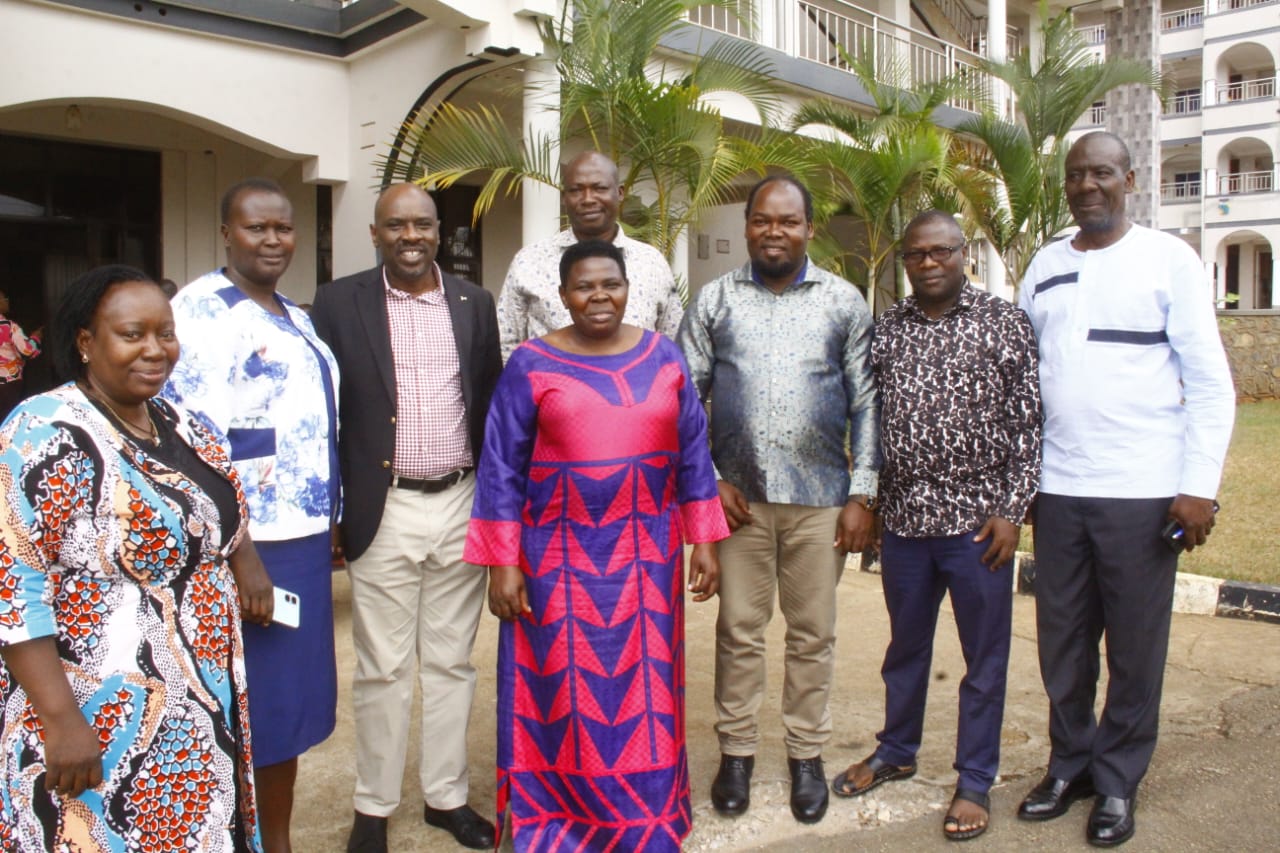
She made the remarks while addressing senior leaders of the NRM Workers’ League and trade unions at a retreat held at Maria Flo Hotel in Masaka City.
The retreat, organised by the Workers’ League Chairman, Hon. Arinaitwe Rwakajara , who brought together the leadership of the National Organisation of Trade Unions (NOTU), the Central Organisation of Free Trade Unions (COFTU) and the NRM Workers’ League. The meeting focused on strengthening workers’ organisations and enhancing their contribution to national development.
Namayanja commended the Government for supporting the workers’ movement and ensuring that workers are represented at various levels of leadership, including local governments, districts and Parliament.
She, however, said representation is only the first step, and urged workers’ leaders to “occupy their space” and become a source of knowledge and guidance in the institutions where they serve.
“Occupy your spaces there. You are the elite in these councils. Be a source of wisdom and guide the rest. Teach others what the workers’ movement is all about,” Namayanja said.
She challenged the leaders to expand the workers’ movement by reaching out to workers across different sectors, noting that many workers remain unaware of the existence of workers’ organisations or how to join them.
Namayanja observed that workers are found in political parties, churches, markets, restaurants, media houses and many other sectors, and encouraged the Workers’ League and trade unions to take their message to these communities.
“The further you can take this message about workers, the more relevant and indispensable you can become,” she said.
On concerns raised about the absence of a dedicated government fund for workers’ welfare, Namayanja clarified that the Parish Development Model (PDM) is not specifically designed for workers because it targets households engaged in the subsistence sector as part of the Government’s financial inclusion programme.
She instead challenged workers’ organisations to develop innovative initiatives through which the Government can support their members.
She cited the achievements of teachers’ unions as an example, noting that teachers have mobilised substantial resources through their Savings and Credit Cooperative Organisations (SACCOs).
Namayanja urged workers’ leaders to study the experience of teachers and develop a creative model suited to the workers’ movement.
“You understand the workers’ terrain better than any of us. Come up with a creative way through which Government can support workers’ unions and ensure that the message of the workers’ movement continues,” she said.
The NRM Chairperson Worker's league who is also MP for Workers Hon. Arinaitwe Rwakajara on behalf of the Workers’ League, said the retreat was intended to strengthen cooperation between workers’ organisations, the NRM and the Government.
He said participants discussed ways of promoting workers’ organisations, strengthening their relationship with the Government and ensuring that workers benefit from the country’s development programmes.
Rwakajara noted that many workers, particularly those earning low incomes in small businesses and other informal sectors, struggle to meet basic needs such as educating their children and establishing additional sources of income.
He said workers’ organisations were therefore exploring ways of working with the Government to establish programmes or financing mechanisms that could support low-income workers to engage in productive side businesses and improve their livelihoods.
He also highlighted the challenge of unemployment and underemployment, noting that some highly qualified Ugandans, including people with master’s and doctoral degrees, are working in jobs below their qualifications because they have been unable to secure employment in their professions.
He said the Workers’ League and trade unions could work with the Government to identify qualified workers and professionals who can be deployed to areas where their skills are needed.
“We are trying to make sure that we have that link between Government and workers’ organisations, the party and union members, so that our workers are also benefiting from their country and contributing fully to the transformation of this country,” Rwakajara said.
The retreat is expected to strengthen collaboration among the NRM Workers’ League, trade unions and the Government while developing practical proposals to improve workers’ welfare, representation and participation in Uganda’s socio-economic transformation.