President Yoweri Kaguta Museveni has challenged young Ugandans to take a leading role in fighting corruption, demanding accountability and ensuring public resources are channelled into programmes that promote wealth creation, infrastructure and economic transformation.
The President said young people should not remain passive observers of government decisions but actively engage leaders to ensure national resources are used to benefit citizens, warning against misplaced priorities that undermine development.
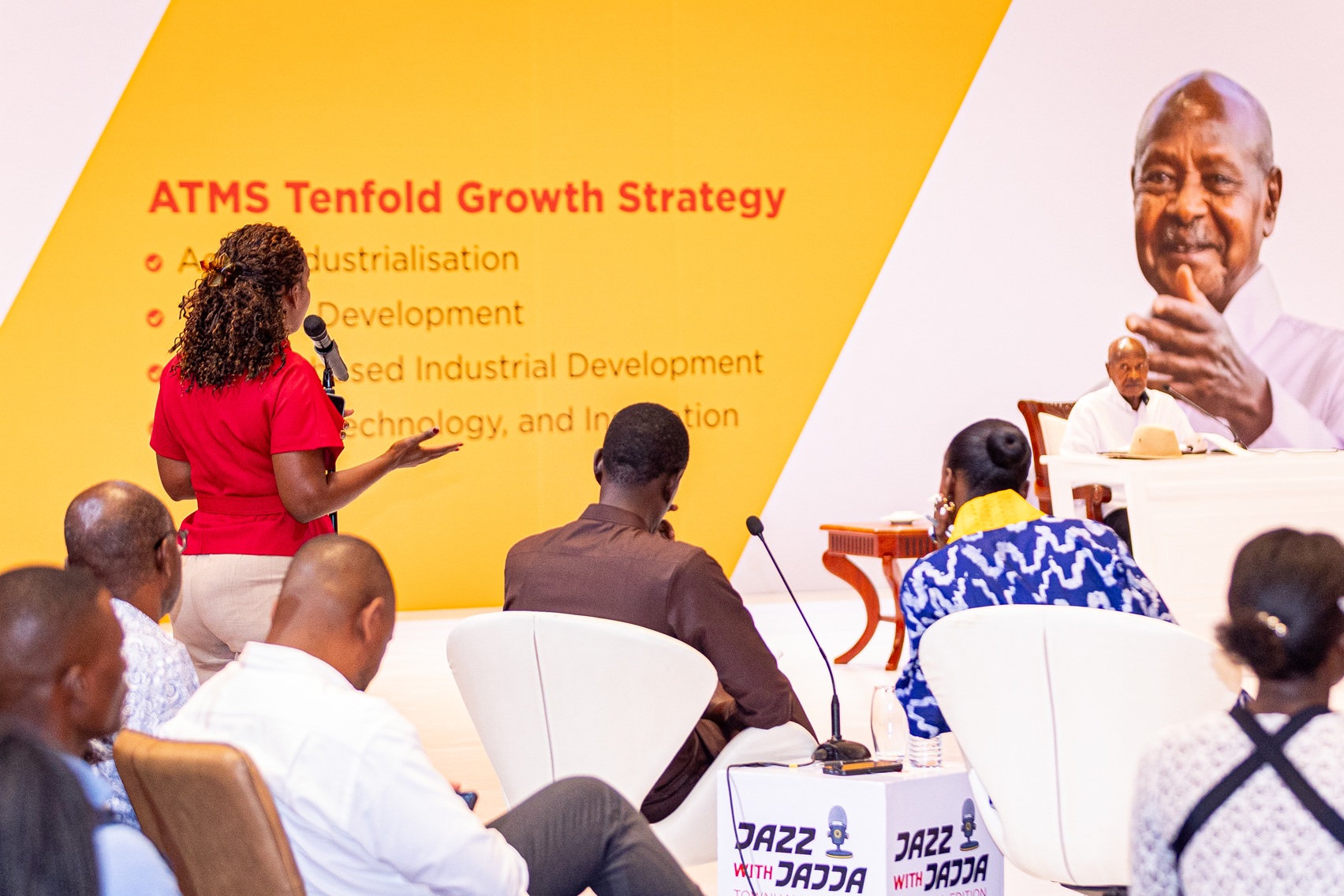
He made the remarks on Sunday during the third edition of Jazz with Jajja, an engagement with young entrepreneurs and professionals held at Rwenzori Hall, Speke Resort Munyonyo.
The event, organised by the First Daughter, Mrs Natasha Museveni Karugire, brought together young people from different sectors to share their experiences, discuss challenges affecting their businesses and engage the President on Uganda’s development priorities.
Held under the theme ATMS Tenfold Growth Strategy, the gathering focused on Agro-industrialisation, Tourism Development, Mineral-based Industrial Development and Science, Technology and Innovation.
Museveni challenged the youth to demand accountability from leaders, particularly over public expenditure, saying Uganda needed to prioritise investments that directly support production, jobs and household incomes.
He cautioned against political demands for the creation of more districts and cities, arguing that administrative expansion should not take precedence over wealth creation and essential infrastructure.
“Your leaders want to divert money into creating new districts and cities. That is why you, the youth, should insist that wealth creation is more important. I have supported wealth creation, not the creation of cities. Tell people that we should divert that money to Emyooga and PDM,” he said.
The President cited his experience as a cattle keeper in Ankole, saying economic progress depended on productivity rather than administrative boundaries.
“My cows were doing well, and I did not have a problem whether the district was Mbarara, Kiruhura or Kazo because none of that helps my cows,” he said.
He urged young people to challenge leaders to prioritise electricity, roads, railway infrastructure, schools, hospitals, innovation funding and wealth creation programmes.
“Let us demand that we start with infrastructure, electricity, roads, railway, schools and hospitals, wealth creation and innovation funds,” he added.
Youth urged to embrace patriotism
Museveni also urged young people to embrace patriotism, Pan-Africanism, socio-economic transformation and democracy, which he described as the ideological principles guiding the National Resistance Movement (NRM).
He said patriotism enables Ugandans to work beyond ethnic and regional divisions, while Pan-Africanism opens opportunities for businesses to access a wider continental market.
The President encouraged young entrepreneurs to build networks across Africa and advocate for the removal of trade barriers that restrict the movement of goods and services.
He cautioned against viewing corruption as the only obstacle to business growth, saying fragmented markets and trade restrictions also undermine economic opportunities.
Museveni urged young people to move from subsistence production to commercial agriculture, manufacturing and services, saying Uganda's transformation depended on increasing the number of households participating in the money economy.
He encouraged them to utilise government programmes, including the Parish Development Model (PDM) and Emyooga, to establish and expand income-generating enterprises.
“Young people, you have a simple job if you listen to the NRM. We have programmes covering almost every area. Under PDM, each parish is receiving money, with almost Shs900 billion allocated across the programme. Emyooga is also there, but the programmes are not being properly mobilised. Go and follow up these programmes,” he said.
Innovation and accountability
The President highlighted the importance of science, technology and innovation in Uganda's transition towards a knowledge-based economy, citing government funding for scientific research and innovation.
He challenged young scientists, professionals and entrepreneurs to develop solutions to challenges in healthcare, agriculture, manufacturing and other sectors, saying innovation was central to economic growth.
The engagement also featured presentations from young entrepreneurs who shared their experiences in agriculture, manufacturing, fashion, aviation and digital innovation.
Sandra Nabasirye, popularly known as Slay Farmer, spoke about her journey into horticulture, using social media to encourage young people, particularly women, to embrace farming as a business.
Amir Wamala, a goat breeder from Kiruhura District, shared how he started his enterprise during the COVID-19 pandemic before undertaking specialised training in South Africa and transforming his farm into a learning facility.
Anthea Ibembe, co-founder and chief executive officer of APA Original Kisubi Tea Limited, said her company had expanded its Ugandan tea brand into supermarkets and international markets, creating employment for more than 240 young people directly and indirectly.
“Uganda must be the name on the box,” she said, calling for greater investment in value addition to strengthen locally produced brands.
Other participants raised concerns over access to affordable financing, skills development, market access, local procurement and opportunities for young people with disabilities.
The Minister of State for Youth and Children Affairs, Mercy Lakisa, called for increased financing for young people aged 35 and below, particularly those engaged in agro-industrialisation, while highlighting the need to support young people who are not in education, employment or training.